Sunday, 26 October 2014

Fashion and Textiles Taster

For the first session in the fashion and textiles taster week, we were given small samples of colour to then replicate on blank pieces of paper using paints and inks. This was so that we could use these colour samples when making our 2D fashion garments. 
We also had to make samples using paper and other materials such as masking tape, electrical tape, wool etc, to form patterns using lines and shapes. As well as this, for private study I had to develop these by adding different types of straps so that it could be applied to the body. Below are the samples I created. 
After doing this I found that the straps that were stronger and would work better were those made from electrical tape, as when folded it was quite smooth so it wouldn't be uncomfortable when fitted around the body. 


As I was ill for the last two days of this taster, I had to make my garment from home with limited materials. I managed to purchase two different types of paper bag. One white with handles and two that were green paper bags that were brown inside. I managed to mix colours using watercolour paints that were similar to those on my colour sample, but these weren't as effective and as similar to those I created with inks and acrylic paint in college. Other materials included masking tape, electrical tape and pritt stick. 
This is my 2D piece once applied to the body. I created a loop fastener with electrical tape to tie it around the back but unfortunately I created the strips too short so cello tape was needed! (I should have measured this before). 
Although I worked from home for this I think it worked quite well and I was relatively pleased at how it all came together as a garment in the end. The handles worked really well as straps and the accent colours looked attractive as decoration on the front. However this would have all looked much better if this was done properly in college and I was able to take professional looking photographs there too. 

I enjoyed this taster as it is something I am not used to and would never choose to do personally. It gave me a good insight into fashion and textiles and taught me that it isn't all about what something looks like, it's the design, the thought process and the planning behind it which is much more important. Without these skills there would be no successful outcome. 


Thursday, 23 October 2014

Fashion and Textiles Research

Lucy Orta

I have chosen to look into Lucy Orta's work as she caught my eye with her original, conceptual fashion ideas. In particular I like this outfits as they look baggy and hang from the body, which is a similar effect to what I have got to create with my paper garment. What I like about these pieces are the newspaper and text print all over them as I like type and I think these add a dramatic impact. I find the heart print quite odd and off putting, although it makes sense in terms of context.


Another piece which I like is this. I can see how a certain piece of material can be manipulated and then transformed into something which can be attached to the body, working as a garment piece. I find the head piece odd and it isn't something that I like myself, but for the piece as a whole it works and is successful. The colours are very bland and dirty, which may suggest it is intending to look old and shabby. I can see the material has been carefully worked to look like it is made up of different layers too, although it works as one. 


In particular, this yellow dress really appeals to me. It's beauty and elegance really caught my eye. Although this is far extreme in comparison to what I will be making myself, I really like the look of it. The yellow colour really draws in your attention and contrasts massively with the black bold type printed onto it. When actually reading the type, you realise you are being given a contrasting message too. The beauty and the daintiness of the dress contrasts with the ruthless message of the type implying that they wish someone would die. This creates quite a synical impression, which adds to the dramatic impact of this piece as a whole. I really like this as it is wonderful in appearance, but the hidden message makes it feel secretive and horrific at the same time. 


Another piece which shows materials are being used to cover the whole body is here. I quite like the foil/metallic materials used to create an engineered sort of feel towards it. The bright red also contrasts to this and draws your attention to it. I think this is important when looking at colour because things need to work well together as well as being able to catch your eye. 

Rei Kawakubo

I have chosen to look into Rei Kawakubo's work because when looking at it I can see a link between her work and the work I have been set to do in class. This is to do with shape and their forms. For example, this work in particular emphasises the use of shape and what you can do to address it appropriately in context of the garment. Within these pieces you can see clear shapes that have been formed out of the materials to create impact. Shape is going to be a key feature when creating my own piece so I would like to think that it will look as crisp and as sharp like these shapes look like here. I also like how Kawakubo manages to disguise these deliberate shapes and works them into her pieces, by covering them in material to make it look as though this is what the dresses should look like. 


Another piece I have taken a liking to is this, which is from the Comme des Garçons. Similar to the previous set of dresses, this piece also represents a good use of shapes with materials. I think the bold red circle immediately attracts the viewers attention and allows the piece to stand out. The netting used as the main scaffold to the garment works effectively as a subtle way of contrasting with the bright red shape. Equally, the black suit-looking material also works well as it takes away the plainess of the netting. I also like the difference between the materials used as it shows that different things can work well together as one. In addition, the white facial makeup on the model allows the viewer to focus more on the actual garment, rather than looking at who is wearing it. This allows you to appreciate the clothing more and pay close attention to it. 

Basquiat 

Basquiat interests me because of his illustrative, graffiti art. I have chosen to look at his work because it is something I am interested in (Visual Communication). Not only do his illustrations convey several different messages, the use of type and the chaoticness of it also works really well and adds to his messy style of work. 
In particular I like the use of accent colours which bring his work to life. It transforms the image from a neutral point of view to colour which creates a huge dramatic impact. This is something I must consider when creating my piece (colour). 


Issey Miyake 
I have chosen to take a deeper look into Issey Miyake's work as I recognise the name, but only when associating him with aftershaves and perfumes. Because of this, I thought it imperative to look into his clothing and fashion work too. When looking at his work online I instantly became inspired by his wacky styles of clothing which are made up of all sorts of different geometric shapes. Already I can see how paper could be used to make similar effects to these by folding. 


Here I can see there has been a range of shapes that have inspired Miyake's three pieces. The sharp edges create an edgy feel towards them and works really effectively. As well as this, I think the monotone colours work really well in line, shapes and forms to create an abstract look. The pattern itself is really bold and dazzling which draws your attention to it. 


These are another set of designs which would look good when incorporated during the fashion taster session. This is because of the shapes which have been created with the materials to create sharp, crisp edges which could be interpreted well with the paper bags if used correctly. The metallic grey colours also work well as they aren't too striking and in your face, it just shows that the garments themselves don't need to be bright and colourful as they already do themselves justice. These pieces have developed my inspiration and have enabled me to gain some ideas for design using paper bags. 


3D Design and Applied Art Research

Ndidi Ekubia 

Ndidi Ekubia is a contemporary silversmith who has been creating ranges of silverware in London since 1998. She uses hand raising techniques and inspiration which has been developed over the years from her African heritage. She produces a variety of work ranging from bowls, vases, drinking vessels, wine coolers, salvers and centrepieces. 

I chose to look into Ekubia's work as when looking on the Internet the images of her pieces really caught my eye. I am intrigued how she marvellously crafts the silver into so many different ways. I like the curves, patterns, angles, all created beautifully to create stunning pieces of artwork which can be used throughout the home. As this is real silver I should imagine that these products are of a high expense, especially because she is a well known artist, however, I should think that high street stores could offer pieces like this at a more reasonable, affordable price. 
I really appreciate this type of artwork as you can see just how skilful and talented you have to be to produce such pieces. You can see that this is a skill that has to be practiced to get right to enable to perfect it and make just as good pieces as Ekubia's. Not only can you appreciate the skill and time out into this type of work, you can also appreciate its aesthetic qualities also. This is a bonus to the craft.


Friday, 17 October 2014

3D Design and Applied Art Taster

This week was the taster for 3D design. I didn't quite know what this entailed beforehand but now I have a good idea. To start off the week we were making paper sculptures which I enjoyed because I liked the concept of an abstract windmill I created. This was made up of a rectangle and two different sized 3D triangles. Each of these had slits in with looped pieces of card to form strips, adding detail onto the sculpture. I think this worked really effectively and looked good when using photography lighting. 

After this task came the touchy-feely project. This I didn't enjoy so much. I found that my object didn't really give me much of a challenge so I found myself adding more bits on to use up the time I had and also make it look more interesting as a stand alone object. Once placed against the real object, I could see just how different my perception was of it as it was described to me. Although I didn't particularly enjoy the task itself, I learned that trying to picture something that is being described to you is a lot harder to visualise than actually seeing it for yourself. 

As you can see, the real object in comparison to my idea of it is completely different. This is because I drew the two rectangle pieces the wrong way, otherwise it would have looked more precise. 

After doing the paper sculptures, our final day in 3D design and Applied Art was much more fun. I really enjoyed exploring the different processes of metal work as I had never done this before. I was intrigued at how plastic metal was once it was manipulated by certain methods. I think most things went reasonably well as it was purely for experimenting, so rather than making it look good I was purely exploring in the workshop, however I do think my drilling was poor and sometimes I could barely drill holes through some metals! One thing I like in particular is the wire patterns made with nails on top of the manipulated metals as it gives a final edge to my cube. Burning the cube beforehand also gave a really nice effect and added to its character. 


Friday, 10 October 2014

Visual Communication Taster

This week I've been introduced to visual communication (Graphic Design, Illustration and Animation), and it's safe to say I have really enjoyed it. I think experimenting more with line drawing and being introduced into drawing type has been a great introduction to this area of art and design. It has made me realise that these specialisms aren't all about design softwares such as Photoshop and Illustrator, it's actually a lot broader than that and traditional methods of art and design are highly appreciated too. I have never really considered myself as a good drawer, however drawing type and using different types of media such as ink and oil pastel has helped me to develop these skills and also enjoy using them.

These are two collage pieces of line drawing made up of objects associated with the senses and type from different types of packaging. I really liked the effect of the white emulsion using a dry brush on these grounds as it creates a textural, soft effect which is good to draw on. I think the ink drawings look most effective on these grounds as the back contrasts massively and really stands out on the pages. Things that didn't work too well was the high heel shoe on the objects piece as the grey felt pen didn't show up very well on the paper and sort of gets lost on the page. On the type piece I think the bottom right doesn't look as effective as the single lines of graphite also doesn't show up as well as the ink, block graphite lettering and the oil pastel. Apart from these negatives I really like these pieces as a series and I think they work quite well.

I also enjoyed experimenting with different types of type in my sketchbook as prep for my two final pieces. I think a lot of these look really effective and as a double page spread I think they are eye catching as a whole and are interesting to look at. 


These are thumbnails from my sketchbook when planning for my final pieces. I found that fine liner pens worked really well for getting the finer, intricate details of the type which overall made them look neat and professional. I also enjoyed using charcoal as a way of filling in the type as it really made it stand out and look bold. The only downfall about this is that it can be quite messy and could smudge all over the page. Less successful media used in these was the graphite, as it didn't get the sharp edges that I would have liked. To improve these, I should have experimented more with grounds in my sketchbook so that I had a range of surfaces to work from beforehand. 


This is my one hour drawing of the inside of a cupboard. I really enjoyed doing this as it is something I have never done before and I think it went well. I got really into the different lines and shapes when drawing the individual objects. Adding detail on these really brought the piece to life. I also enjoyed focusing more on the different types of font used on the labels of these products as it tested my ability to concentrate and think more carefully about what I was drawing. The only downfall about this is that some objects aren't the right proportions as I wasn't looking at my objects as much as I should, although I do really like these pages in my sketchbook and it's one of the things I've most enjoyed doing since being on the course so far. 

This is part one of my final piece for Visual Communication. I used pages from an old music book and brown paper with white emulsion as my grounds. The materials I used for drawing include, collage, fine liner, sharpie and oil pastel. 
The type used looks rather flamboyant and elegant which I really like, however the bolder type could have been improved by being straighter on the page. 

This is the second part to my final piece. I really like this as the collage letters really stand out, especially with them being outlined with marker pen. I also like the contrast between the elegant writing and the boldness of the 'you' at the bottom. The yellow arrow created with collage and oil pastel also attracts your attention and looks prominent on the page. As a set I think they have been successful and I really enjoyed doing them.

As a whole I have really enjoyed these taster sessions and I will seriously consider choosing this to specialise in later on in the course. 


Tuesday, 7 October 2014

Photography and Fine Art Taster

Photography and Fine Art aren't two specialisms which I think I would choose, however it was good to be able to have a taster to gain a better understanding about them to see whether I was right about this. The photography session was interesting, taking photos of different types of materials and themes to get a range of different images. Turning these into tactile images was quite unusual, but intriguing to learn how others may interpret them. 
This is my chosen image which I developed during the fine art taster. I chose to use this image as there were a range of different features on it. 

This is my sculptural fine art piece using plain white paper. I created this illustrative portrait by slicing parts away with a craft knife. To add more depth, I added layers underneath so it became three dimensional. I quite liked this as it almost looked theatrical. 

This is my piece created during the final fine art taster session. Using a viewfinder, I selected part of my maquette and recreated it A1 size, ensuring the different tones were visible. Materials used include: ink wash, collage, graphite, emulsion and black acrylic. These were all good ways of representing different tonal areas on my piece. To improve this, I would have repositioned my viewfinder so that the area was smaller and looked less like the outline of a face. To improve as a whole, I would create a more geometrical shape to work from rather than a portrait as this limited me during this exercise as it was quite flat. 

Costumologist Workshop


I enjoyed this workshop as it was something I had never done before. The planning with small maquette shapes for me didn't go too well, but my partner's idea for a skirt was brilliant. 

As we were walking around the photography dark room, I was oblivious to how these lights would be seen on camera. Seeing the final pictures gave a positive insider into the different aspects of photography for me. 

Here are some images I thought worked really well. The lines and curves of the lights work to create a river meandering. 


The River Project

River Project
This is the beginning of the river project which I started during the holidays. I wanted a natural look about it so I made an old music book look battered and worn like it was found by a river. I also added certain implements to make it look detailed and attractive to the eye. These included plain string, a feather found by a river and a tag with illustrated words on to make it look inciting. 
At college, it came as a surprise to me that we were going back to basics. Using pieces of paper and line drawings to create abstract pieces. Something I found really interesting was the different types of drawing, which was something I had never been taught before. This taught me that I need to focus more on what it is I am drawing, rather than trying to make it look how I want to on paper. 
This is an example of the blind drawing I did in class using black felt pen and graphite. I love the contrast in materials on this and I think the composition of the individual objects also works really well. 

This is a selection of my abstract pieces of work during the river project. These were done in preparation towards my final piece. The five piece series works well as a set, alrhough they are unsuccessful as being abstract as you can still tell what they are. However, after using a viewfinder and focusing on a section in more detail, my A2 piece worked a lot better and looked like a more sophisticated abstract piece. Materials used here included ink, charcoal and oil pastel. 
My paper strip piece was also a challenge but I really like it as it looks quite illustrative and river-shaped. However, to make it more abstract I should have zoomed in on some of my work more so you were unable to tell what certain sections were. 

This is my finished fabric piece before it exhibited in the Dome. I found it interesting to use fabric as everything we had done previously was on paper, so the transition was a challenge at first. Something I find successful about this is the folded edges where card was stuck underneath. These make really good rippling effects. I also really like the abstract look of the lines at the top half of the piece, whereas the bottom is less so, which would need improvement.

Below is my fabric piece alongside others in the Dome. As a set I think they looked really successful. The meandering of the printed blue letters worked really well to represent the water. 


Monday, 6 October 2014

Visual Communication Research


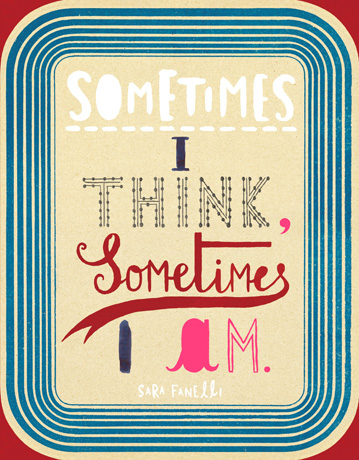
Sometimes I think, Sometimes I am
Sara Fanelli


I really like Sara Fanelli's work because it's very intricate and detailed. I like her use of type and the randomness of each word in her 'sometimes I think sometimes I am' pieces. I can see she has done this so that each piece of lettering conveys a different message, to create something overall as a set piece.The colour she uses, especially in this series is limited. It shows she has thought about this in a selective manner and has thought about how many colours she should use and which ones they should be. I find her interesting as her drawings are capturing and I like her delicate style.
With the bird piece, I like the fact that she has used grounds to work on to associate with the quote she has also added onto the piece. Again, this shows she has thought about what she should work on, as well as the arrangement of the aspects to make her piece as a whole.


Sometimes I think, Sometimes I am


Anime Taste


 Michael Dudok de Wit
I have taken an interest into this artist's work because I like the simplicity of his illustrations, combined with the flooding tones of a selected colour. I think these colours help to create different moods for the characters he is creating. You can see his drawings aren't very detailed, but the precise lines are able to represent his skills just as well. Sometimes less is more and in this case I think this definitely works. 
For example, for the lady and cat drawing, the mood
created is quite cold and lonely due to the blue and yellow colours used. These create quite a sad feel, but also this is clever as they say cats can pick up on your emotions, therefore it is next to the human.


Graphic Design Article - Staci Paul - Wooden Business Cards

Staci Paul

wooden business card designs
Staci Paul mimics the great outdoors with these gorgeous business card designs
Designed by Staci Paul for Carabiner, these cards combine wooden texture with gorgeous colour. Carabiner encourages and inspires outdoor activity by providing students and community members with the equipment they need to connect to the great outdoors in their own community and we think these business card designs would certainly catch the eye.
Click here for the source


I chose to look into this article as I found it inspiring as it is so different. I like the idea of traditional woodwork methods being brought into the more contemporary, graphic design way of work. I really like the long, wide type used as it really brings attention to it, as well as being able to stand out on such bold colours. The artwork used in the making of these wooden pieces also adds to the effect. It's originality really draws me in. I chose this as it is unique and something I haven't seen before.

Other work from this article I was inspired by includes the Jukebox Print. The fact that they are recycling old materials from the 109 year old house intrigued me to see how old waste could be transformed into something new and current. 

I l